
An Khang Pharmacy: Safer Product Discovery for Healthcare E-commerce
A UX and product design case study about reframing a feature request into a safer, more user-centred product direction while preserving the commercial objective.
Project snapshot
The project started as a request for seasonal medicine bundles
An Khang is an omnichannel pharmacy system with 400+ stores across Vietnam, plus web, app and delivery services. The business goal was to increase the number of relevant products included in each order.
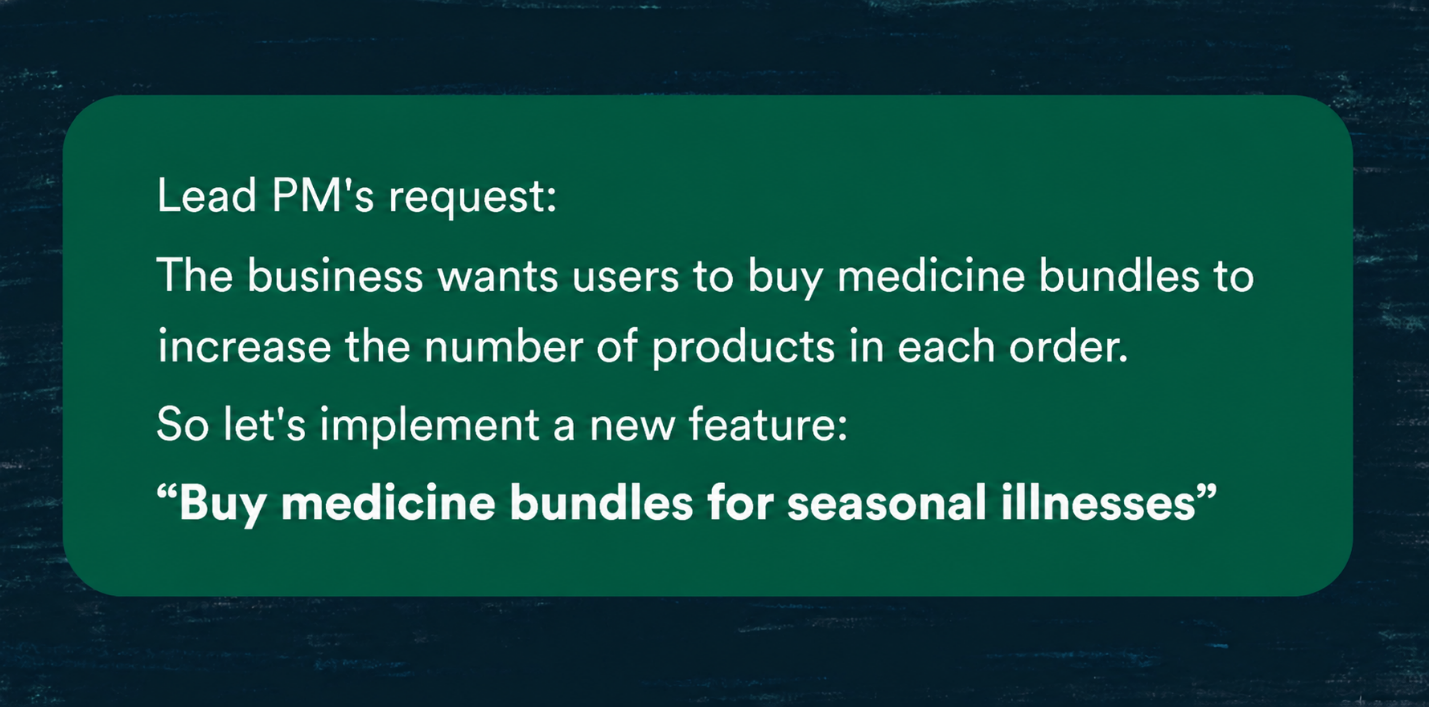
The original feature request was to create medicine bundles for seasonal illnesses. Before moving into interface design, I separated the business objective from the proposed solution and asked whether fixed medicine bundles were the safest and most effective path.
My contribution covered problem reframing, business analysis, regulatory review, research synthesis, UX direction and UI design.
Company
An Khang Pharmacy, 400+ stores across Vietnam.
Business goal
Increase relevant products per order.
Research
6 interviews and a survey with 20 participants.
Role
UX research, product direction and UI design.
Outcome
Contextual discovery, trust signals and guided supplement exploration.
Business reframing
Separating the commercial goal from the requested feature
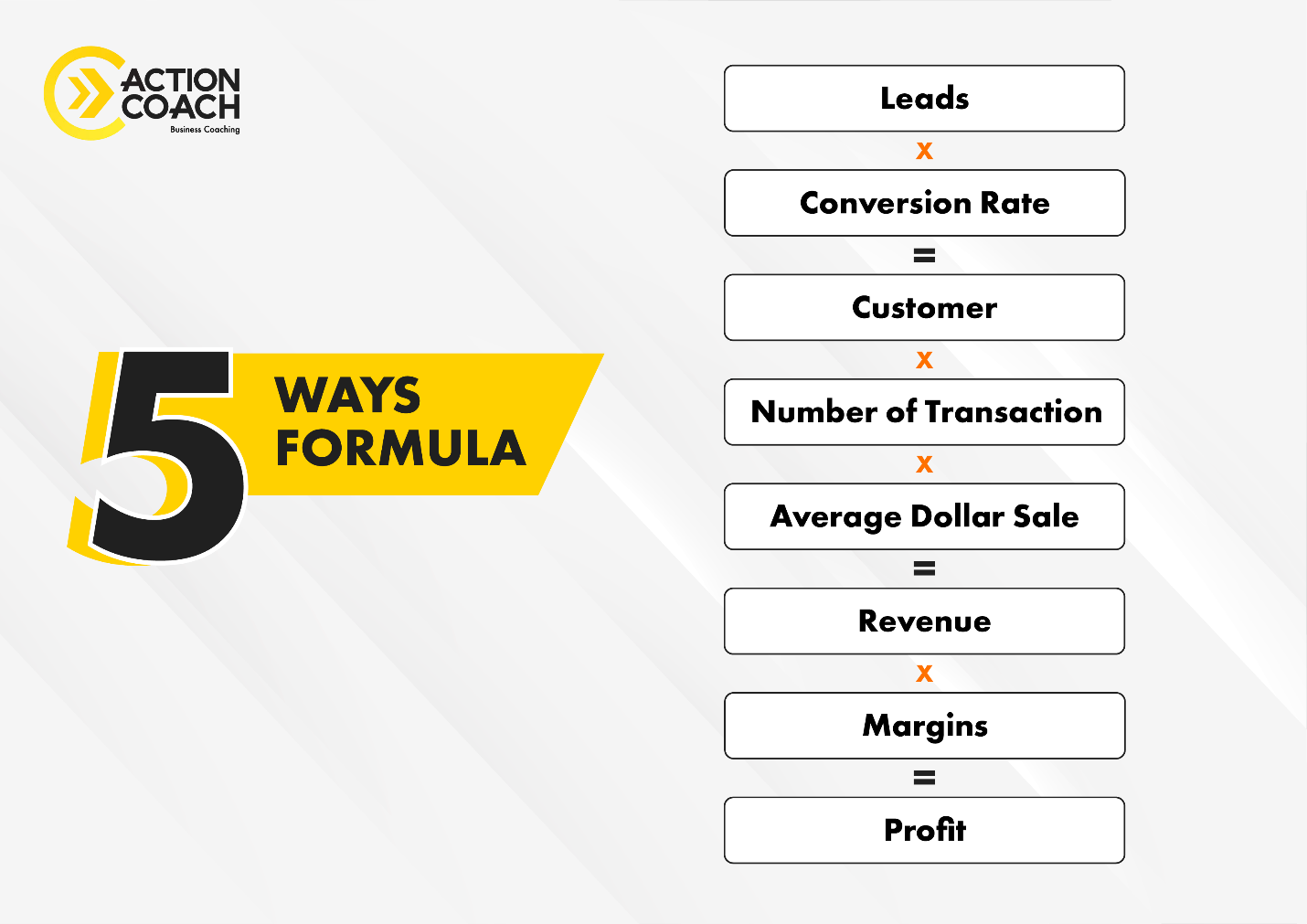
I used the ActionCOACH 5 Ways Formula to identify which business lever the brief was targeting. In this case, the request was primarily about increasing average sale value and the number of relevant products per transaction.
Pharmacy customers usually arrive with a specific health concern, product need or prescription. If in-store conversion is already strong, the most relevant growth opportunities are qualified touchpoints, relevant products per order and appropriate repeat purchases.
The goal did not need to be “sell more medicine”. A better opportunity was to help customers discover appropriate complementary products while protecting trust and safety.
Safety and regulation
The bundle concept introduced patient-safety constraints
The original medicine-bundle concept introduced an important safety and regulatory concern. Vietnam's amended Law on Pharmacy, effective from 1 July 2025, recognises pharmaceutical e-commerce, but standard online retail is limited to eligible non-prescription medicines.
Vietnamese regulations also require pharmacies conducting e-commerce sales to provide online consultation and usage guidance before completing a medicine sale, and to retain customer and consultation information as evidence.
Design boundary: prescription medicines should not appear in a normal e-commerce bundle, recommendation carousel or one-click checkout flow. Prescription-related journeys should route users toward professional consultation and an appropriate fulfilment channel.
Sources used in the original study: Vietnam Law Magazine and LuatVietnam.
User research
Users wanted guidance, reassurance and safer discovery
I used research to understand whether users genuinely wanted pre-built seasonal medicine bundles, or whether their underlying need was guidance, reassurance and safer product discovery. The study included 6 interviews and a survey with 20 late-Millennial and Gen Z participants familiar with online shopping.
Because the sample was relatively small, I treated the findings as directional insights rather than conclusive market evidence.
1. Pharmacist guidance matters
When a product is related to symptoms or treatment, users want reassurance from a pharmacist before making a purchase.
2. Online behaviour is research-led
Users visit pharmacy websites to understand symptoms, compare information and review product details, but they do not always complete the transaction online.
3. Trust is the biggest barrier
Users are concerned about authenticity, correct usage and whether a product is suitable for their individual situation.
4. Lower-risk categories fit cross-selling better
Supplements, personal-care products and medical devices feel less risky than medicines and may be more appropriate for add-on recommendations.
5. Seasonal illness is not a fixed bundle
Age, allergies, health conditions and current medications can affect which products are appropriate.
Research implication
Medicine recommendations should explain relevance, protect trust and provide access to professional guidance rather than behave like ordinary retail upselling.
Insight synthesis
The opportunity shifted from fixed bundles to contextual product discovery
The original brief assumed that users needed a convenient way to buy more medicines in one transaction. The research suggested a different underlying need: users wanted clear guidance, trustworthy information and confidence that recommendations were appropriate.
JTBD: When I feel unwell or want to prepare for a seasonal health concern, I want to understand which products may be relevant to my needs, so that I can make a confident decision without risking inappropriate medicine use.
HMW: How might we help users discover relevant complementary healthcare products while keeping medicine decisions safe, informed and pharmacist-led?
Opportunity
Evidence
Safety / operational consideration
Direction
Fixed seasonal medicine bundles
Users wanted guidance; seasonal illness was not a uniform need.
High risk of inappropriate medicine selection.
Do not pursue
Contextual product suggestions
Users research symptoms online; lower-risk categories are better suited to cross-selling.
Explain relevance and keep prescription journeys separate.
Pursue
Authenticity and trust signals
Authenticity was a major barrier.
Needs clear evidence and a complaint or escalation flow.
Pursue
Guided supplement discovery
Participants reported information overload when researching supplements.
Requires health-specialist input and careful boundaries.
Explore
Subscription for repeat purchases
Potential convenience and recurring-revenue opportunity.
Needs explicit consent, reminders and easy control.
Validate
Solution 1
Contextual product discovery
The first direction places relevant product suggestions inside health-content journeys, where users are already researching symptoms and treatment information.
Safer category priority
Prioritise lower-risk categories such as supplements, personal care and medical equipment. Eligible non-prescription medication should be treated more cautiously.
Contextual matching
Map article context to product metadata so suggestions are connected to what the user is reading rather than shown as generic upsells.
Authority cue
Keep the appraised-by-doctor component visible to reinforce that the health content has been reviewed by a trusted authority.


Solution 2
Trust and authenticity
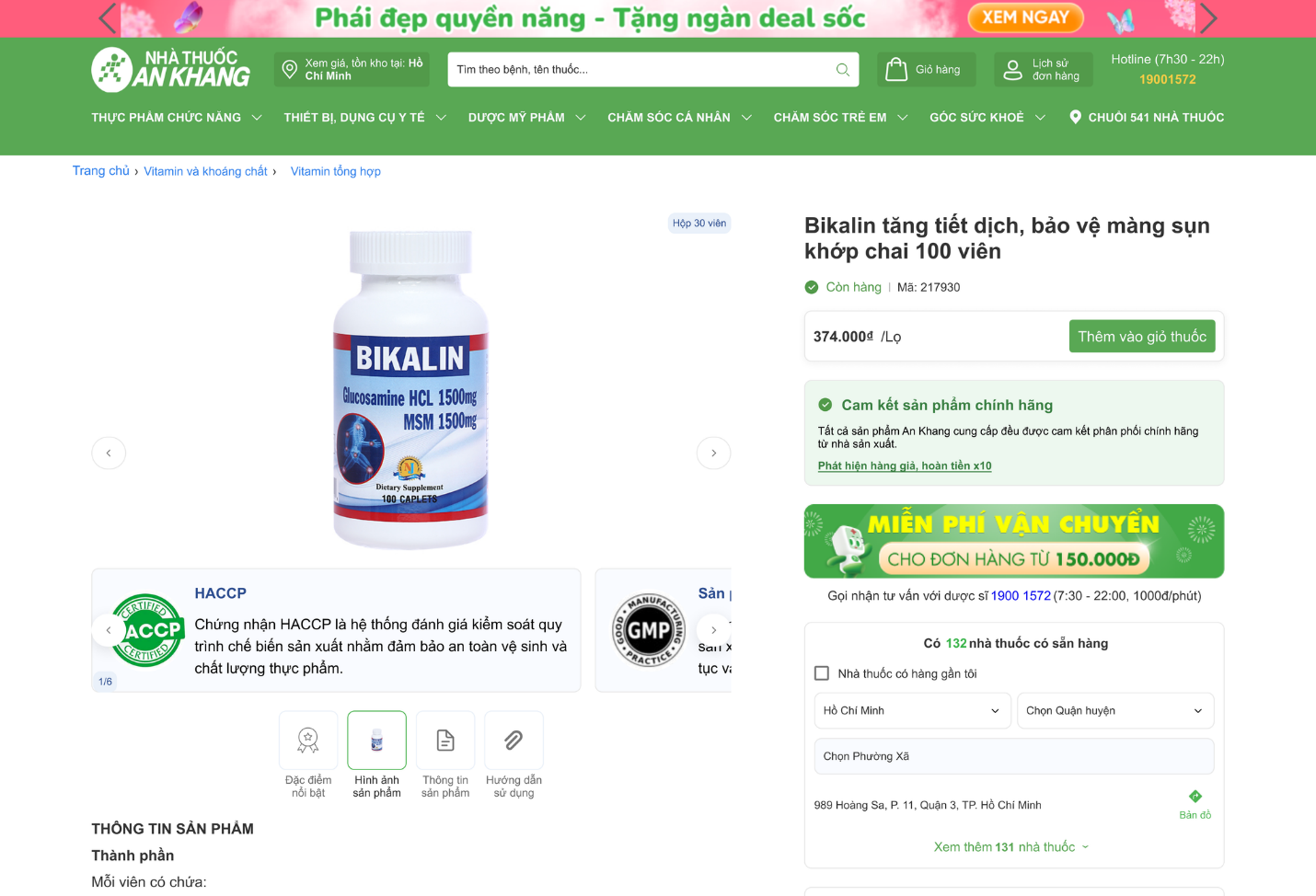
Trust was one of the strongest barriers in the research, particularly for supplements. Instead of relying on reassurance in long-form product information, the design brings authenticity signals closer to the purchase decision.
Visible certifications
Move relevant certifications from lower product-information sections to a more visible position near the product image or purchase area.
Clear authenticity commitment
Communicate An Khang's authenticity and sourcing commitment without making claims that cannot be verified.
Report concern flow
Provide a report authenticity concern flow that captures evidence and routes the case to customer support for verification.

Solution 3
Guided supplement discovery
The third direction responds to a different research problem: users can feel overwhelmed by supplement information and may be unsure which products are relevant to their goals.
Rather than positioning the tool as an automated health recommendation engine, I would frame it as guided product discovery. The tool should help users narrow options, explain why products are being shown and route higher-risk questions to professional guidance.
Proposed scope
- Capture basic context needed for safer product filtering.
- Understand goals such as general wellness, exploring supplements or a specific support need.
- Present products to explore rather than a medically correct bundle.
Subscription hypothesis
- Validate subscription independently from guided discovery.
- Notify users and obtain agreement before each recurring order.
- Allow one-time purchase as an alternative.
Scope limitation
The original UI scope covered the quiz and checkout flow. A real implementation would also require health-specialist input, subscription management and integration with An Khang's internal systems.
Validation
What I would validate next
The original study did not provide post-launch performance data, so I would not present fabricated outcome metrics. The next step would be to validate both usability and commercial impact while monitoring safety guardrails.
User and usability measures
- Can users understand why a suggested product is being shown?
- Do users notice authenticity and certification information?
- Do users understand when pharmacist consultation is required?
- Can users complete, pause or cancel subscription actions?
Business measures
- Recommendation click-through rate.
- Product attachment rate.
- Average order value.
- Repeat-purchase rate for suitable wellness categories.
- Subscription opt-in and cancellation rates.
Safety and trust guardrails
- Pharmacist escalation rate from recommendation journeys.
- Complaints related to inappropriate suggestions.
- Authenticity-report volume and resolution rate.
- User trust feedback after interacting with recommendations.
Success criteria: increase relevant product discovery without reducing trust, obscuring professional guidance or encouraging unnecessary medicine consumption.
Reflection
The best response to a feature request is not always to design the feature
By separating the business objective from the proposed solution, I preserved the commercial goal while moving the product direction towards safer, more contextual and more user-centred healthcare discovery.
The strongest future version of this work would combine the current directional research with larger-scale validation, internal store and e-commerce data, pharmacist input and post-launch measurement.